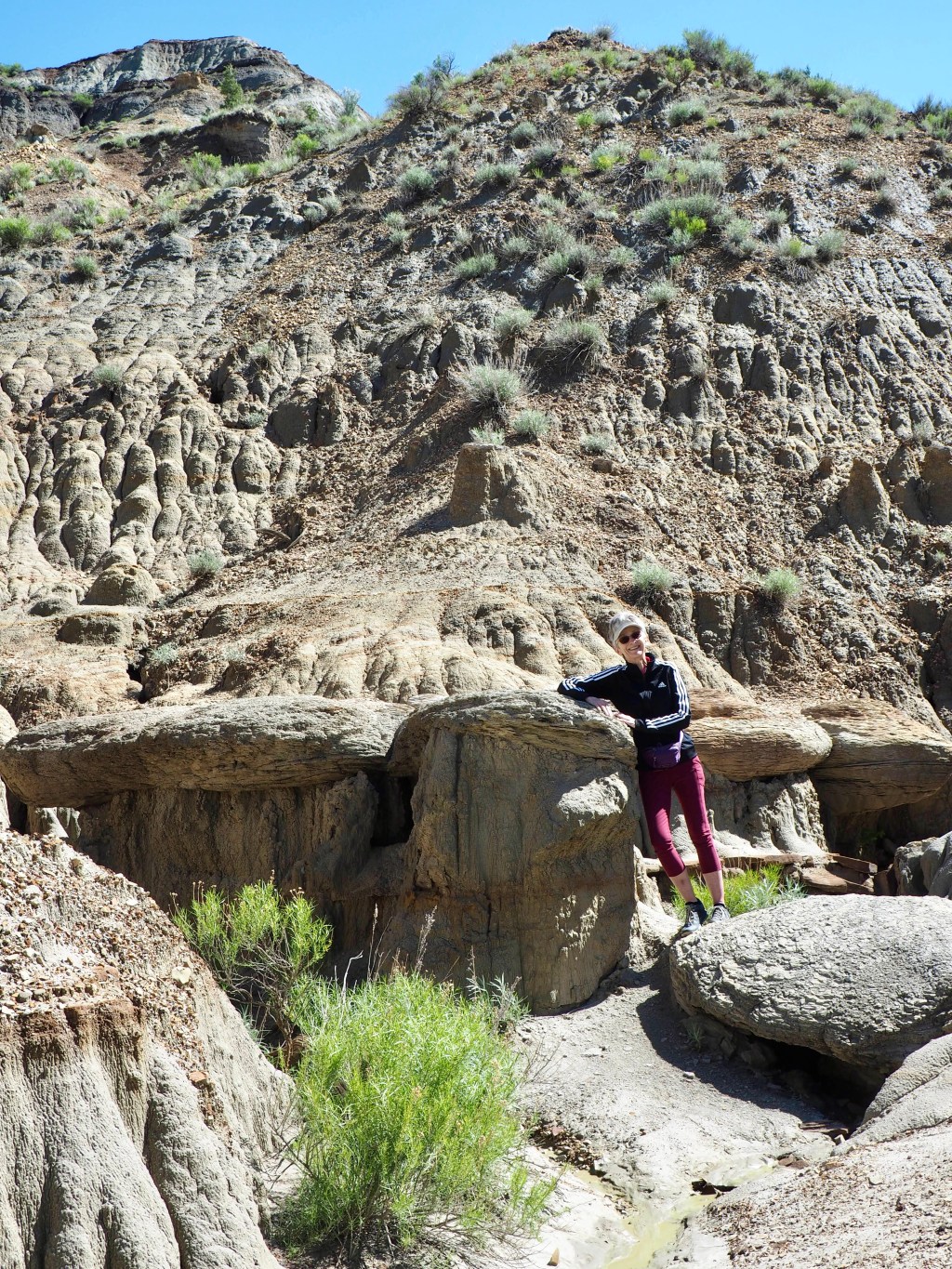
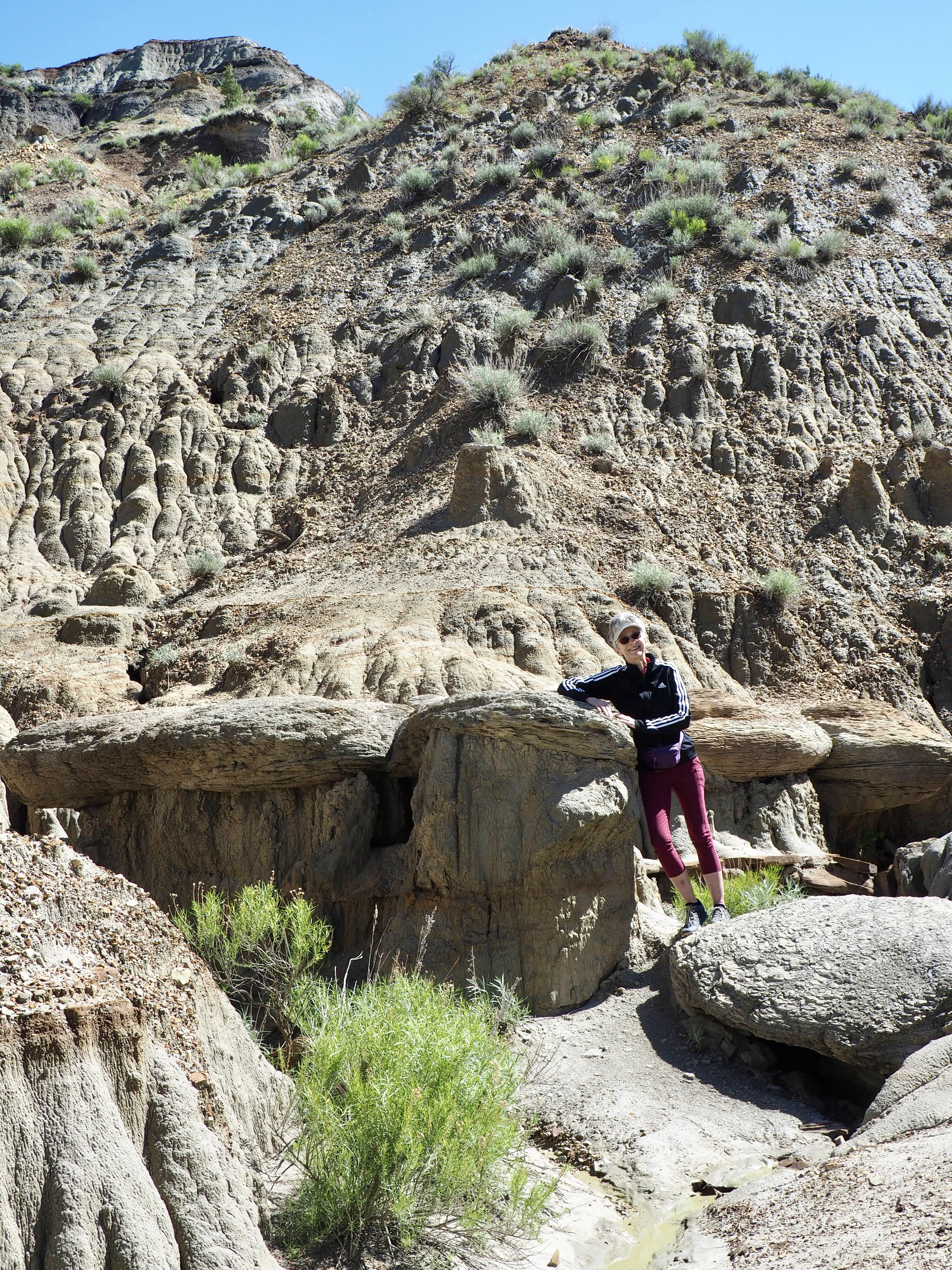
Theodore Roosevelt National Park is divided into three areas. We opted out of the gravel road to the Elkhorn Ranch section, the site of one of Rosevelt’s ranches. Having explored the southern area Wednesday, we drove the 65+ miles from our campsite to see what the Northern area of the park had to offer. Interestingly, these two areas falls in different time zones. Mountain Time in the south unit and Central Time in the north.
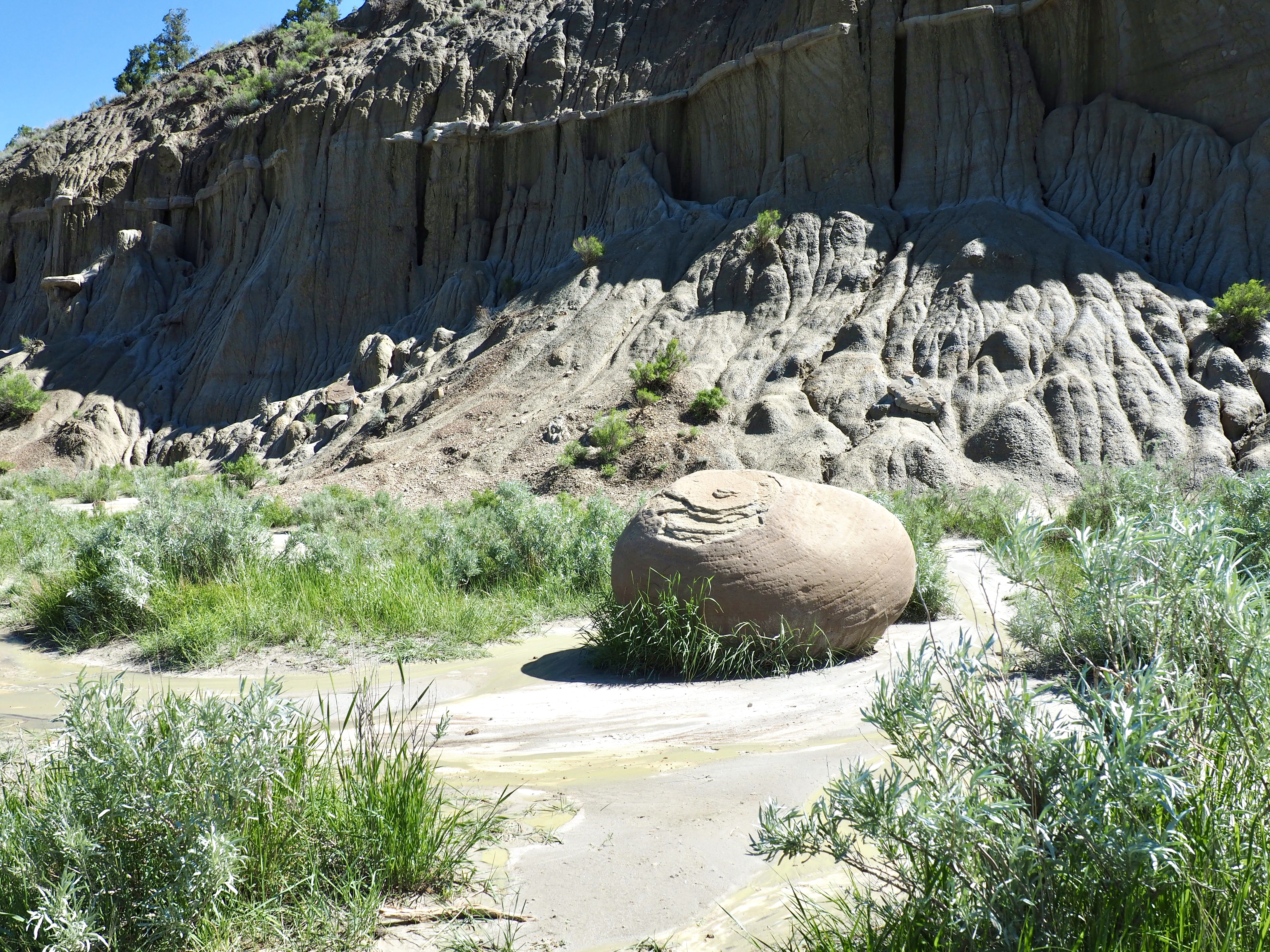
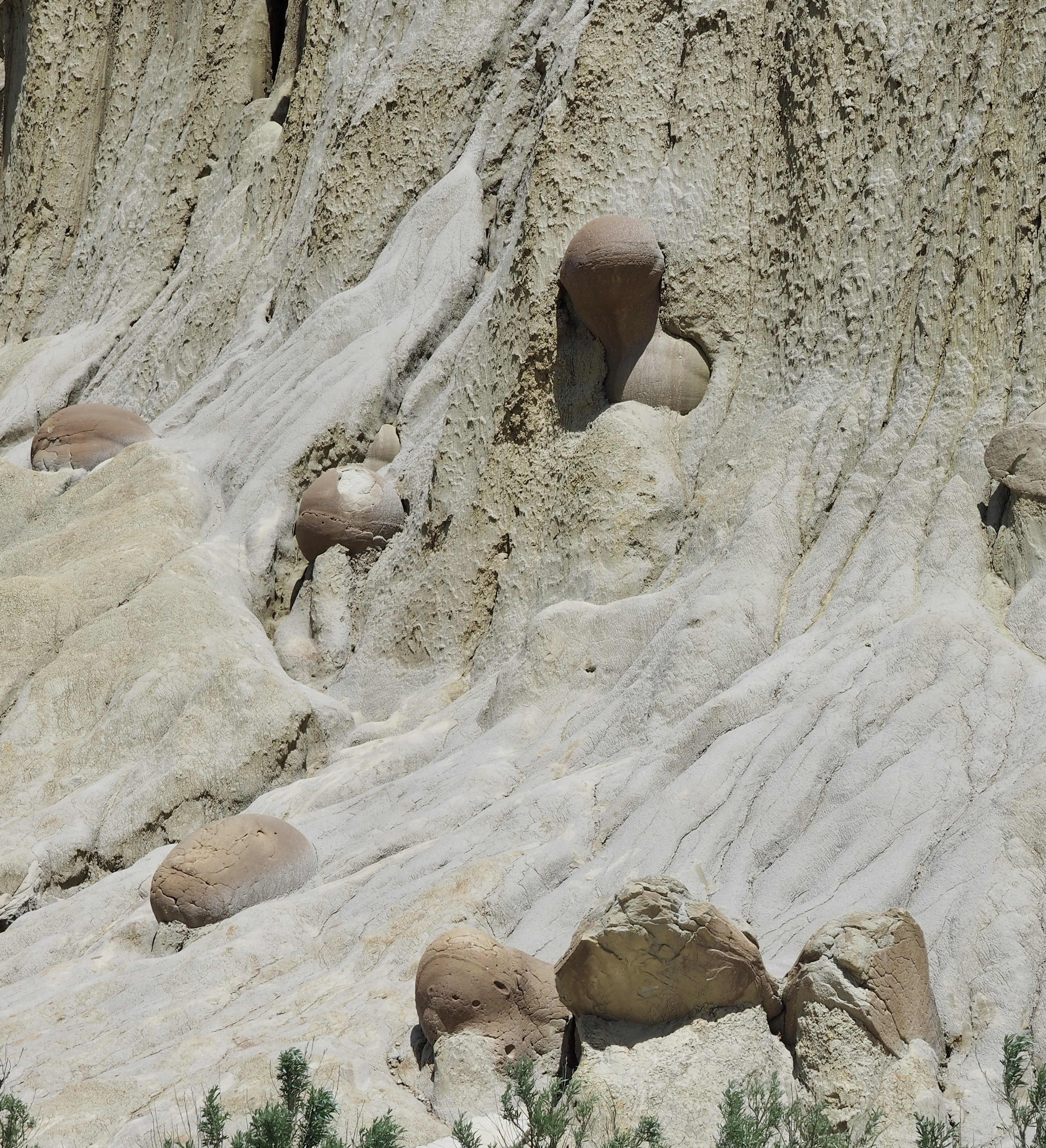


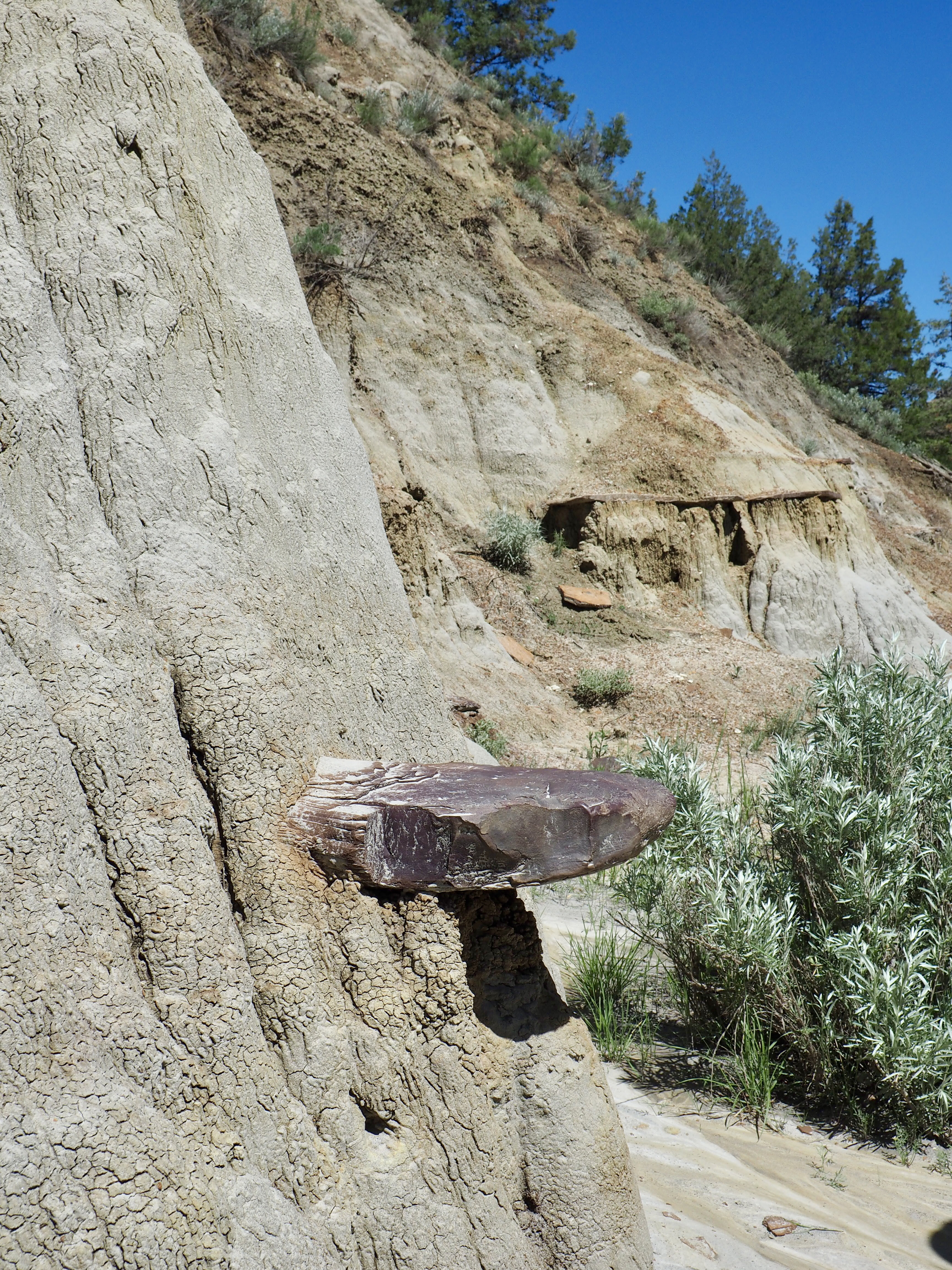
Our first stop was the Cannonball Concretions Pullout (above), one of the highlights (I think) of the park. Ancient sand grains, river deposits and mineral deposits combined, cementing together to create the unusually shaped formations called concretions. As land around them erodes, the concretions are exposed, popping out of the cliff side and eventually falling to the ground. The round ones we see are called “cannonballs.”
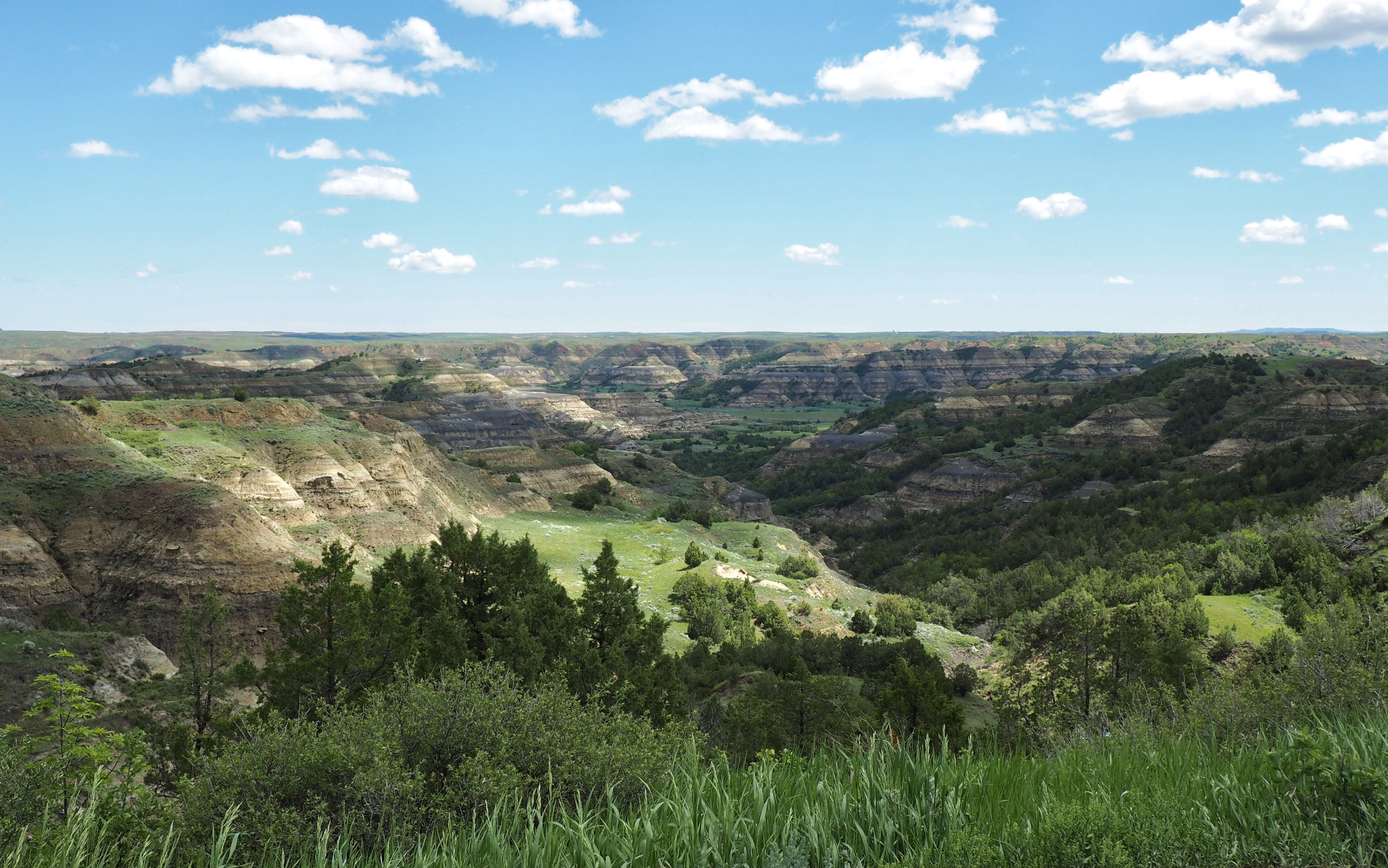



Continuing on, we tried some hiking until the slick clay-type mud, courtesy of the previous night’s rain, threatened to take us both out. Back at the car we spent a fair amount of time scraping gooey mud from our shoes before completing the 14-mile drive.
After hearing so many positive reviews, I think we are both glad we took the opportunity to visit Theodore Roosevelt National Park. Roosevelt first visited the Dakota territory in 1883. As president of the United State (1901-09) he is credited with creating our nation’s first five national parks.
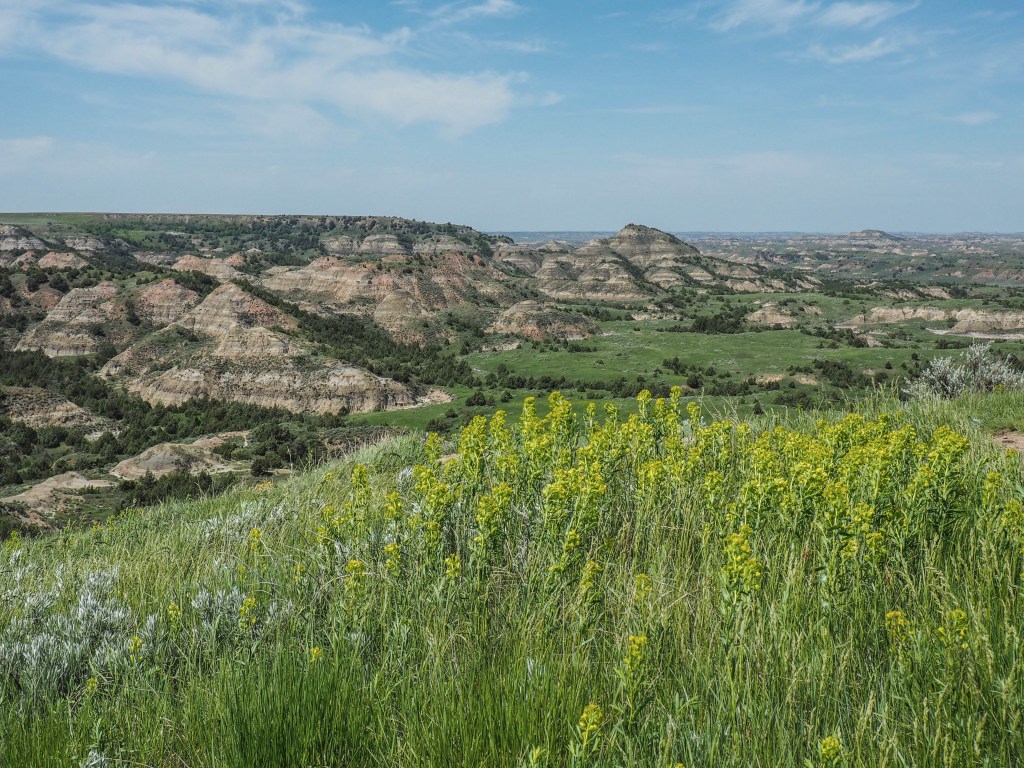
Although it was all beautiful, we couldn’t see everything. The scenery of the north section seemed far more spectacular than the easier to visit southern section which lies just off Interstate-94, but you really can’t go wrong. While it’s a long drive, I’d definitely recommend saving a day to make the trip north. You wouldn’t want to miss those cannonballs.


 carryoncouple
Leave a reply to Kathy Chappell Cancel reply