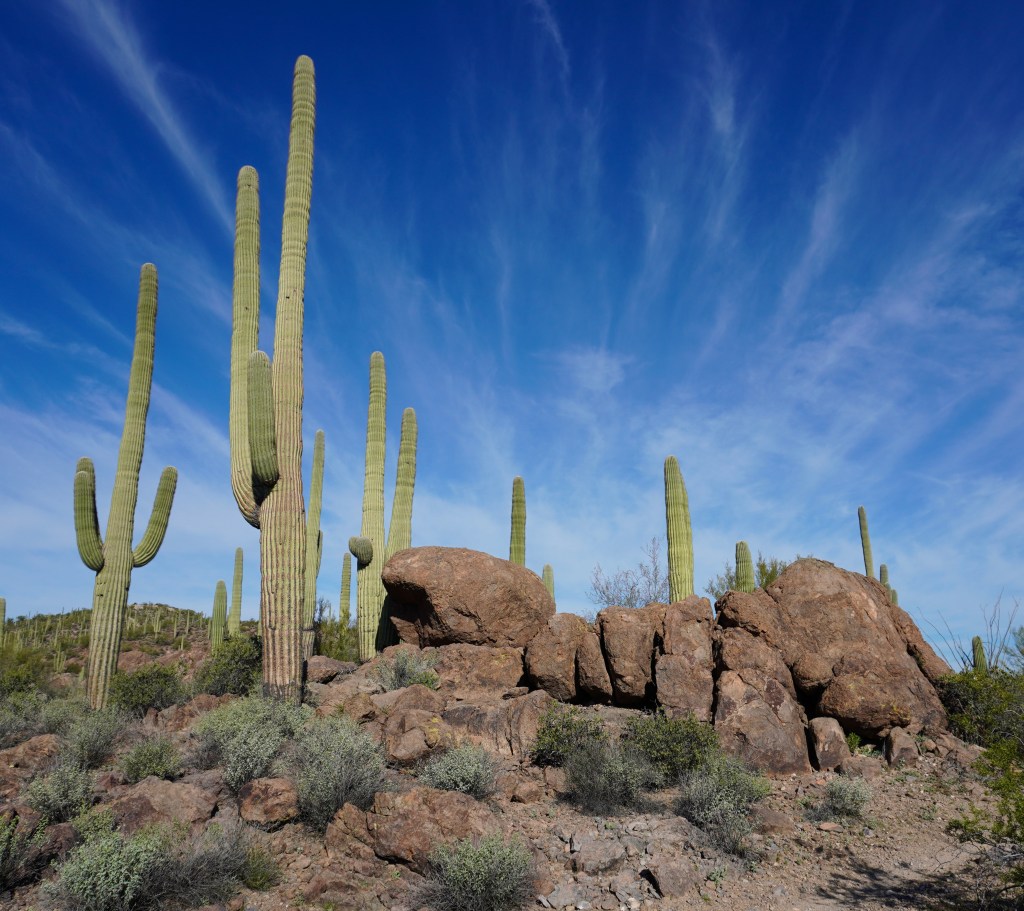
The beloved saguaro cactus has long been a symbol of the American Southwest. These slow-growing desert giants may reach a height of 40-60 feet once fully mature, but that will take about 125 years.
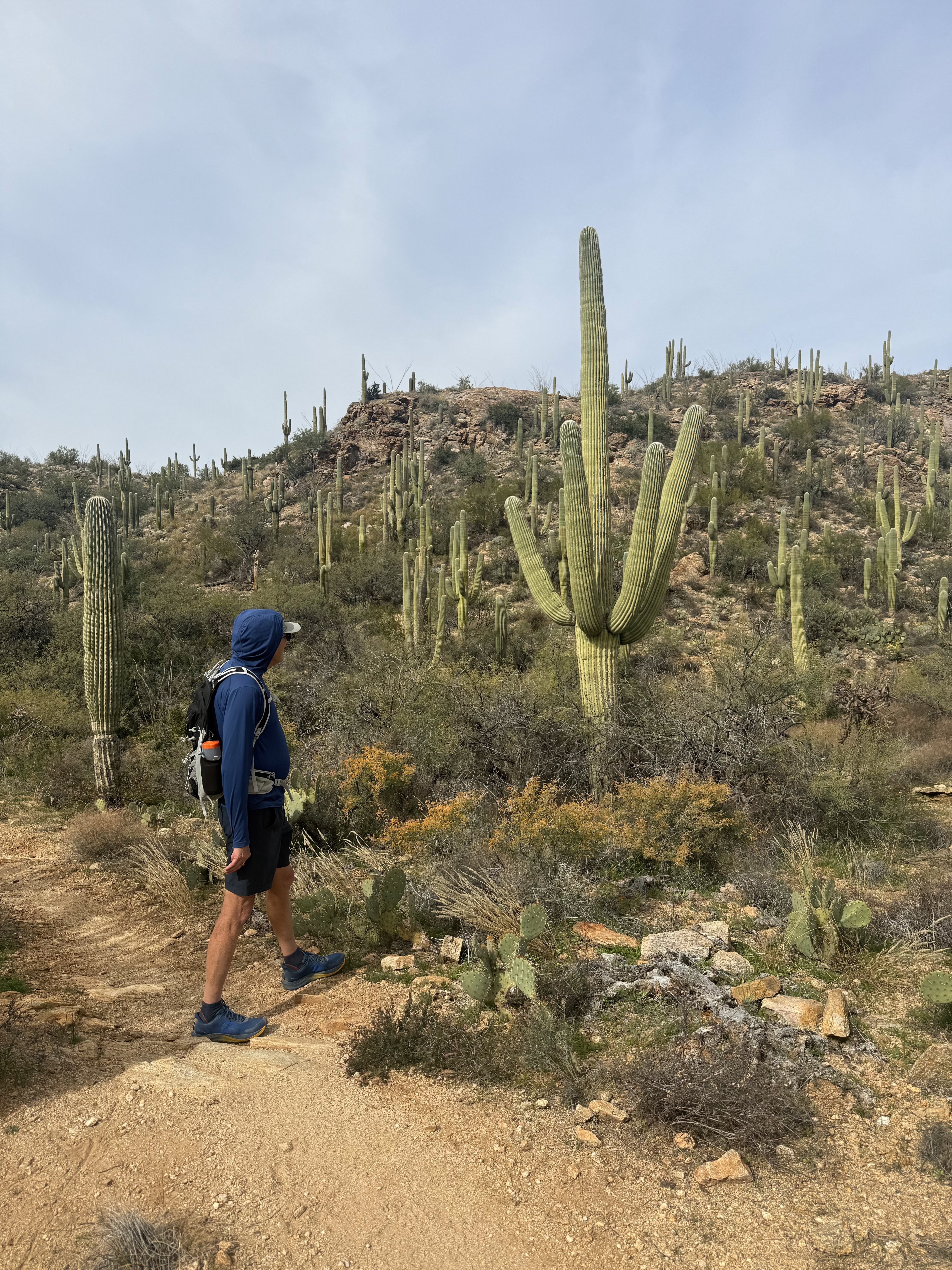
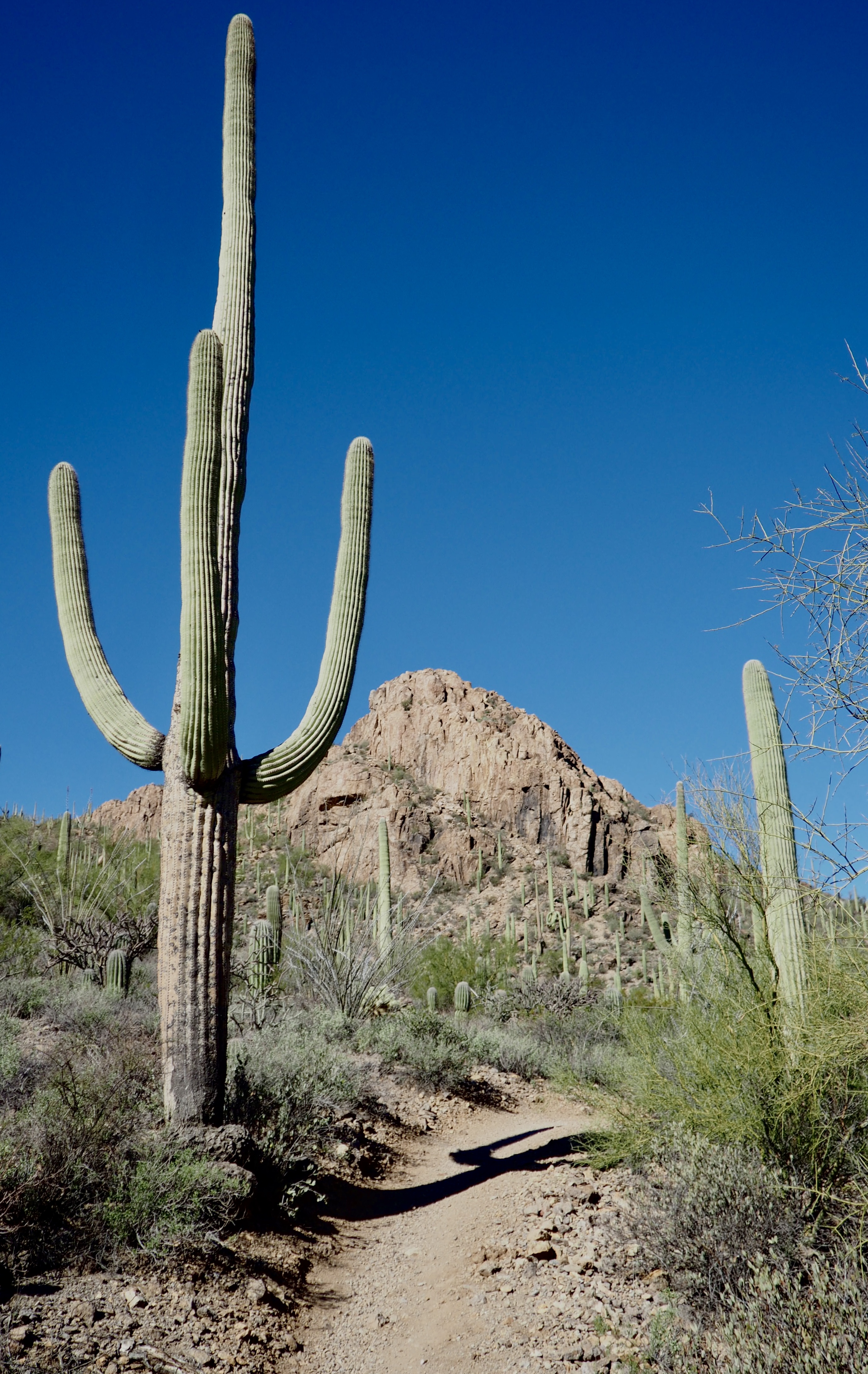
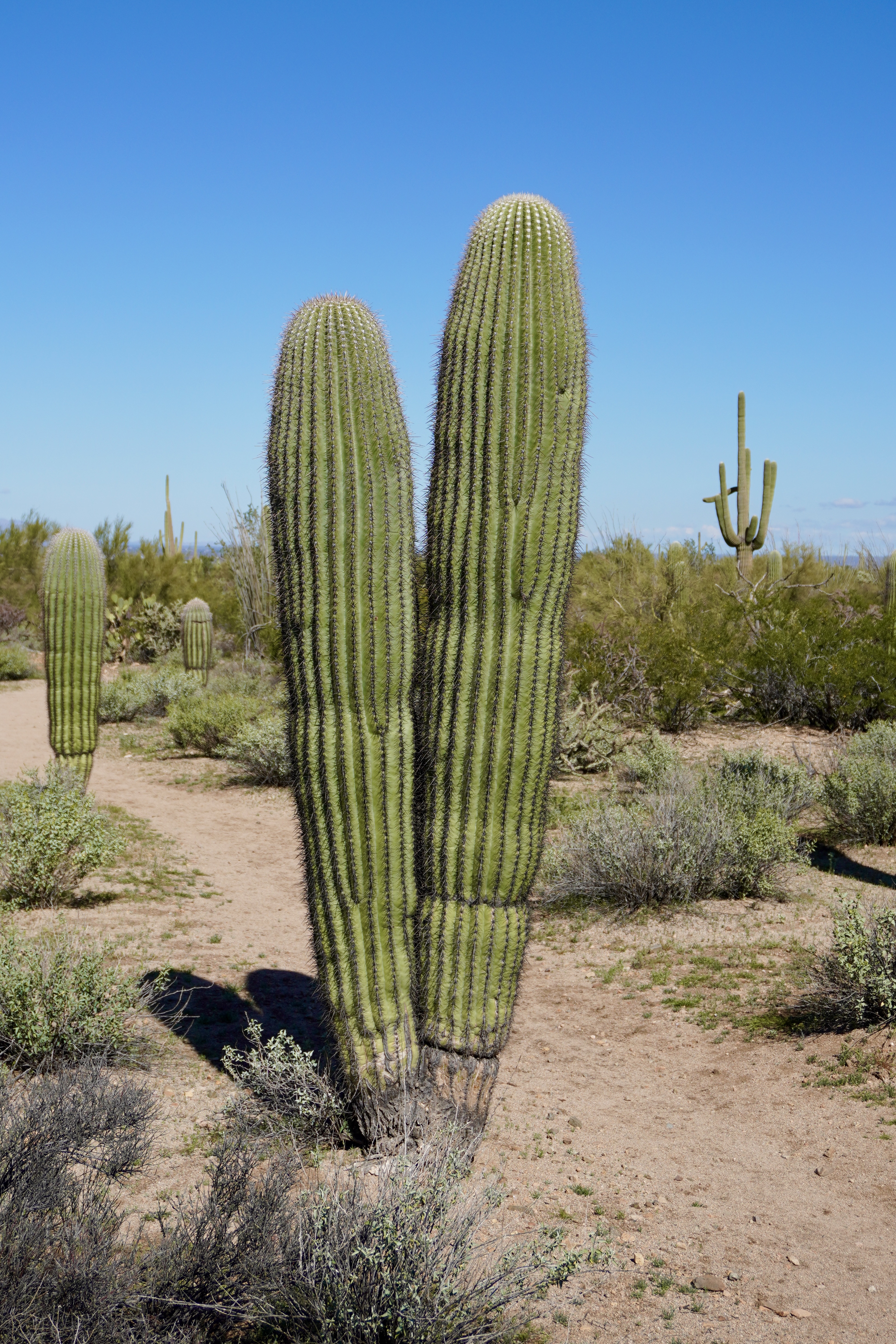
The slow growth is a strategy that allows the saguaros to survive long droughts by storing water. Their specialized root systems and expanding accordion-shaped stems allow them to quickly absorb and store water…a whopping 200-1,000+ gallons.
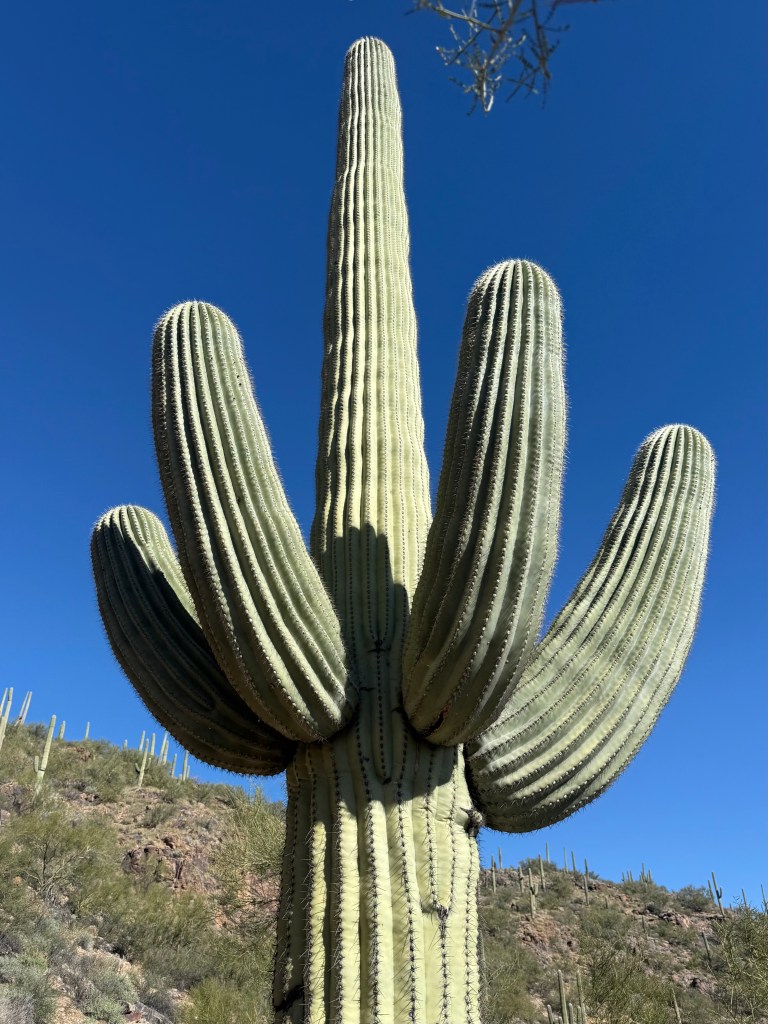
When a saguaro reaches 10-15 feet tall and is 50-100 years old, arms will begin to sprout. Normally bending upwards, the arms help to increase their water supply, and can weigh hundreds of pounds.
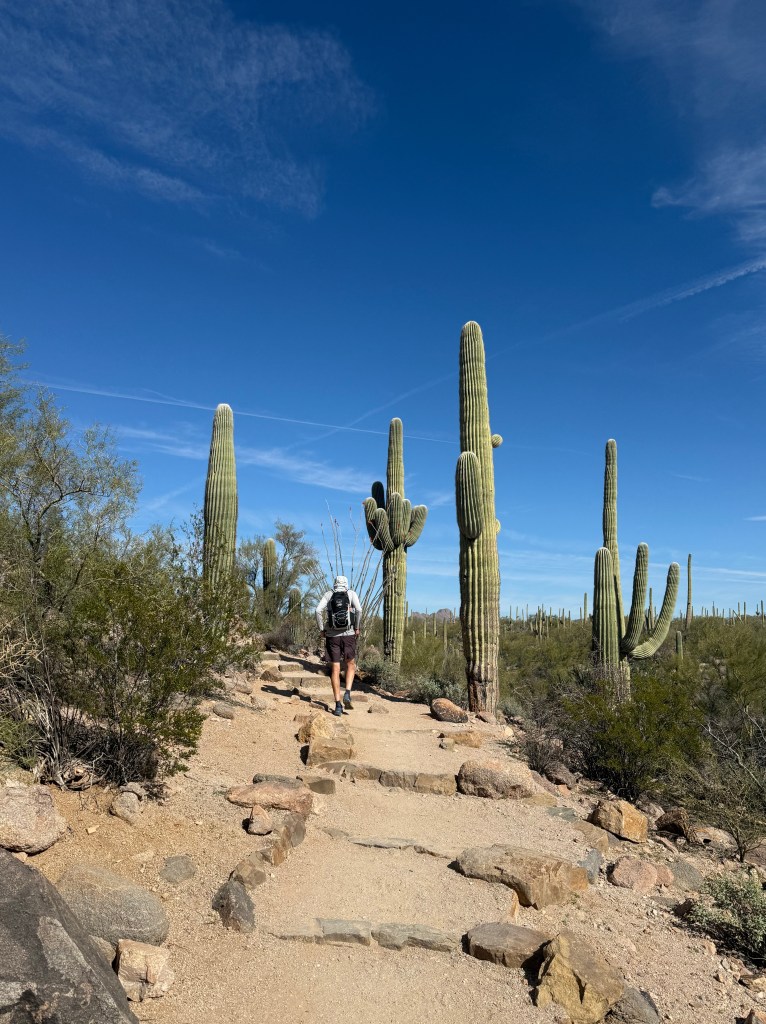
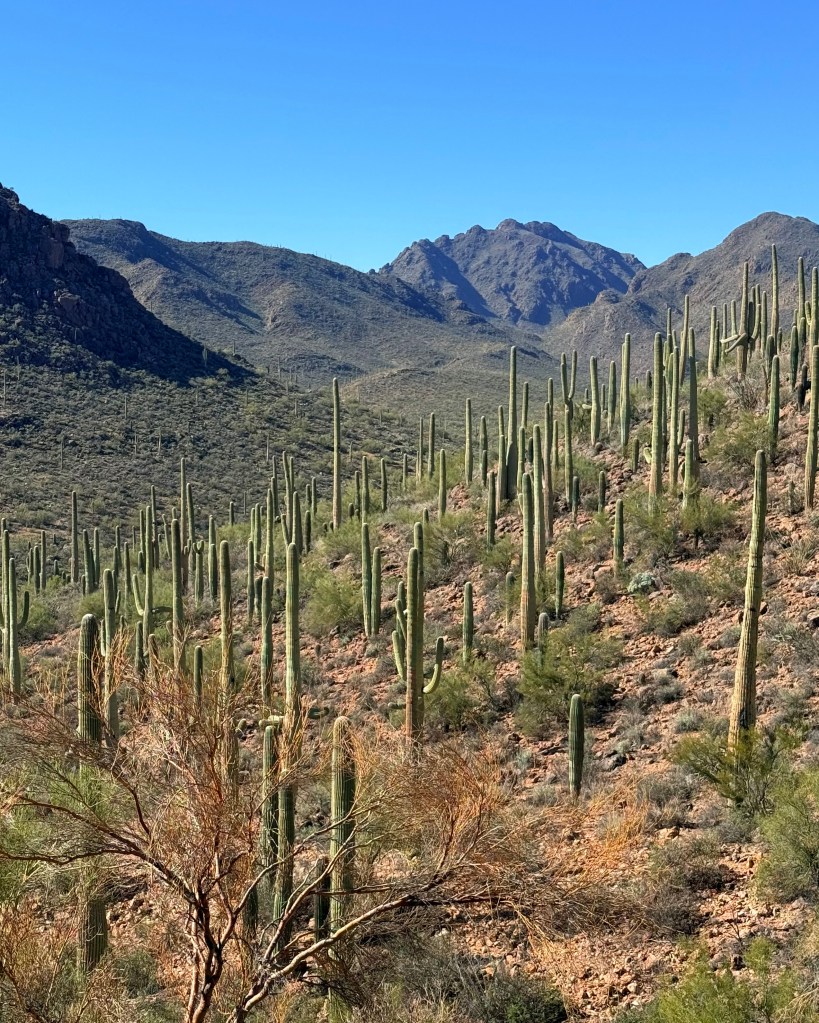
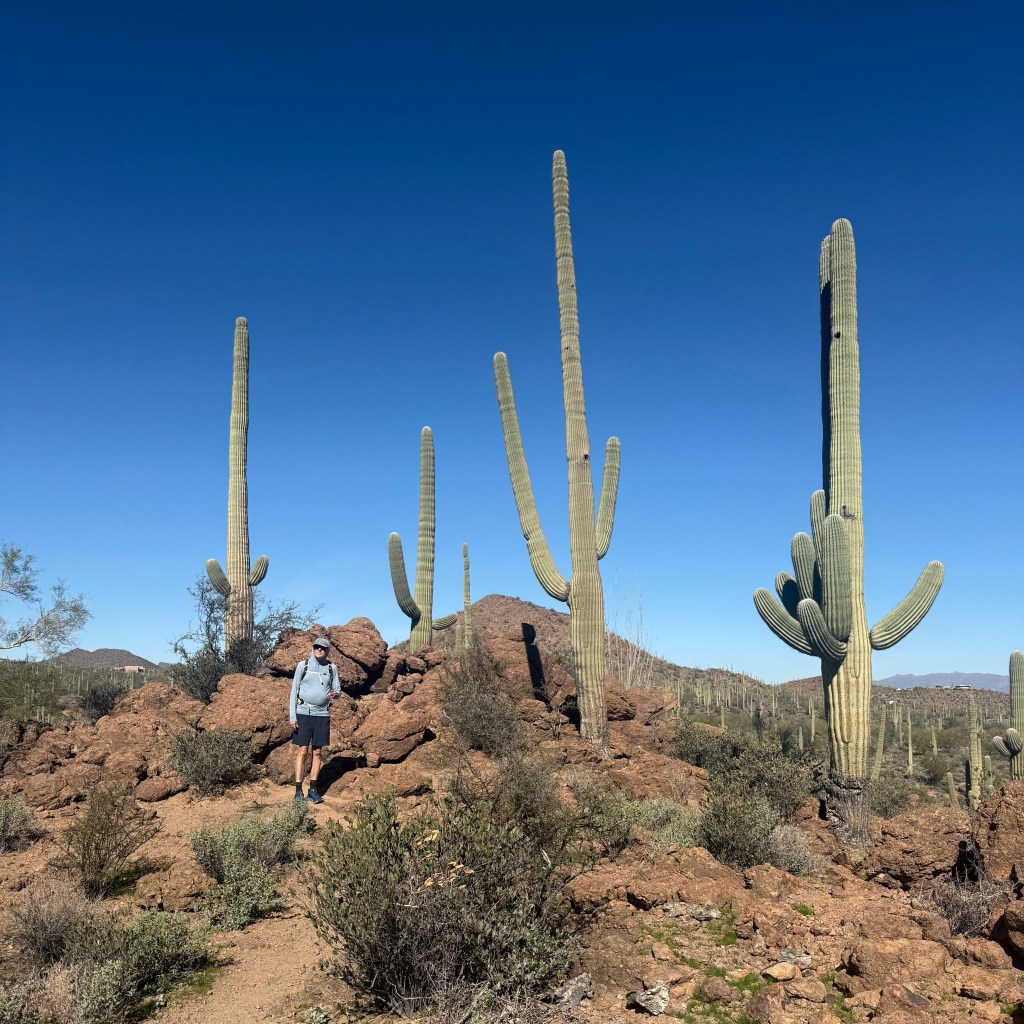
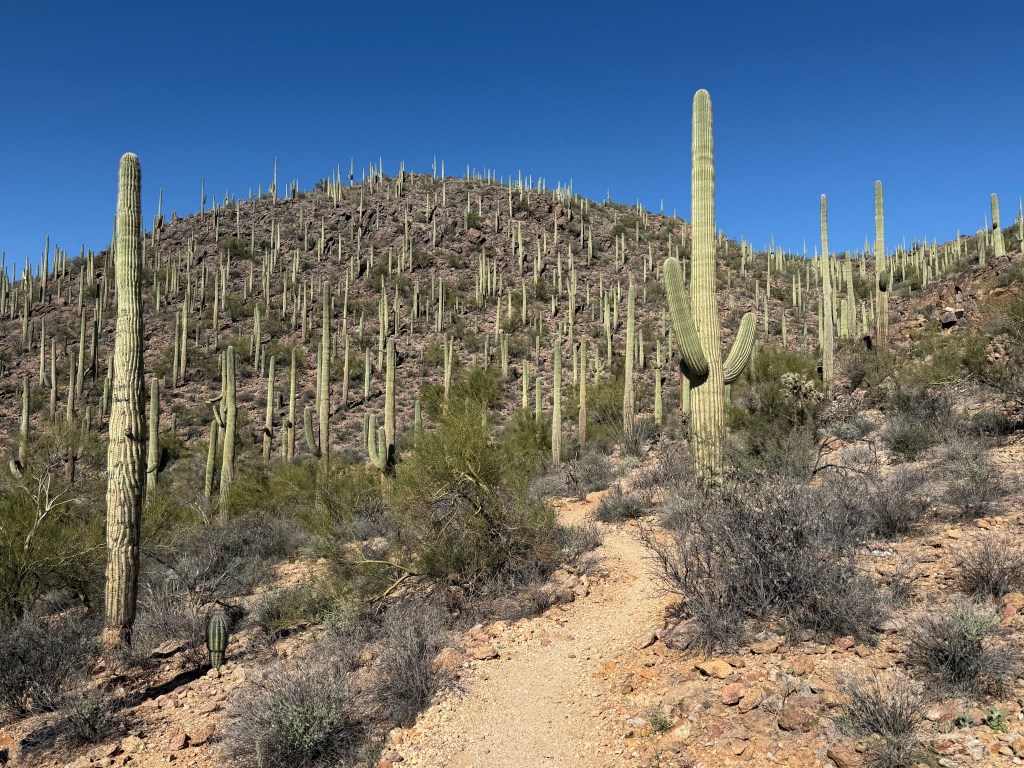
Under the right conditions, saguaro cactus have a lifespan of 150-200 years. A mature cactus that is fully hydrated typically weighs between 3,200 and 4,800 pounds.
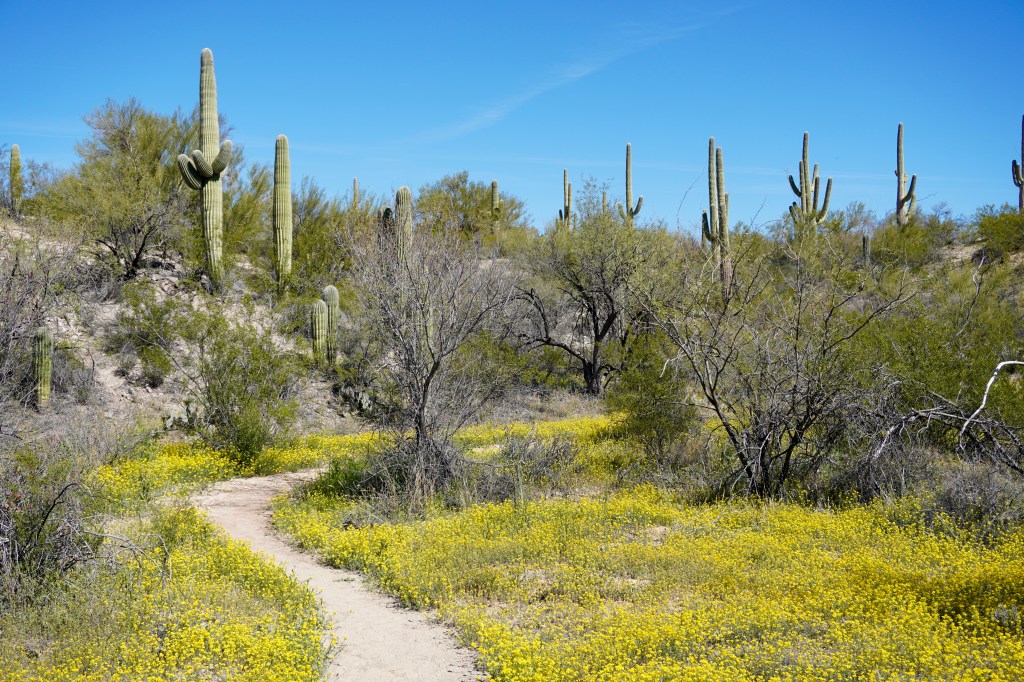
Saguaro National Park, outside of Tucson, Arizona, is by far the best place to get up close and personal with these desert dwellers. The park is divided into two districts. Each has its own park headquarters where maps and information are available.
The Rincon Mountain District lies to the east of Tucson. There you can drive an eight-mile, one way loop drive with pullouts and picnic areas. This is a great option if you don’t have time for the hiking trails.
The Tucson Mountain District is located west of Tucson. In addition to great views and hiking trails, visitors will also find two nearby attractions – The highly rated Arizona-Sonora Desert Museum and Old Tucson, the historic film studio and theme park.
For the budget-minded without a National Park Pass, Tucson Mountain Park offers a network of free trails for hikers of all levels. Most routes are mapped with color-coded trail directions at various intersections.
Winter and springtime are the best times to explore this area. Pack lots of water and enjoy!


Leave a comment